

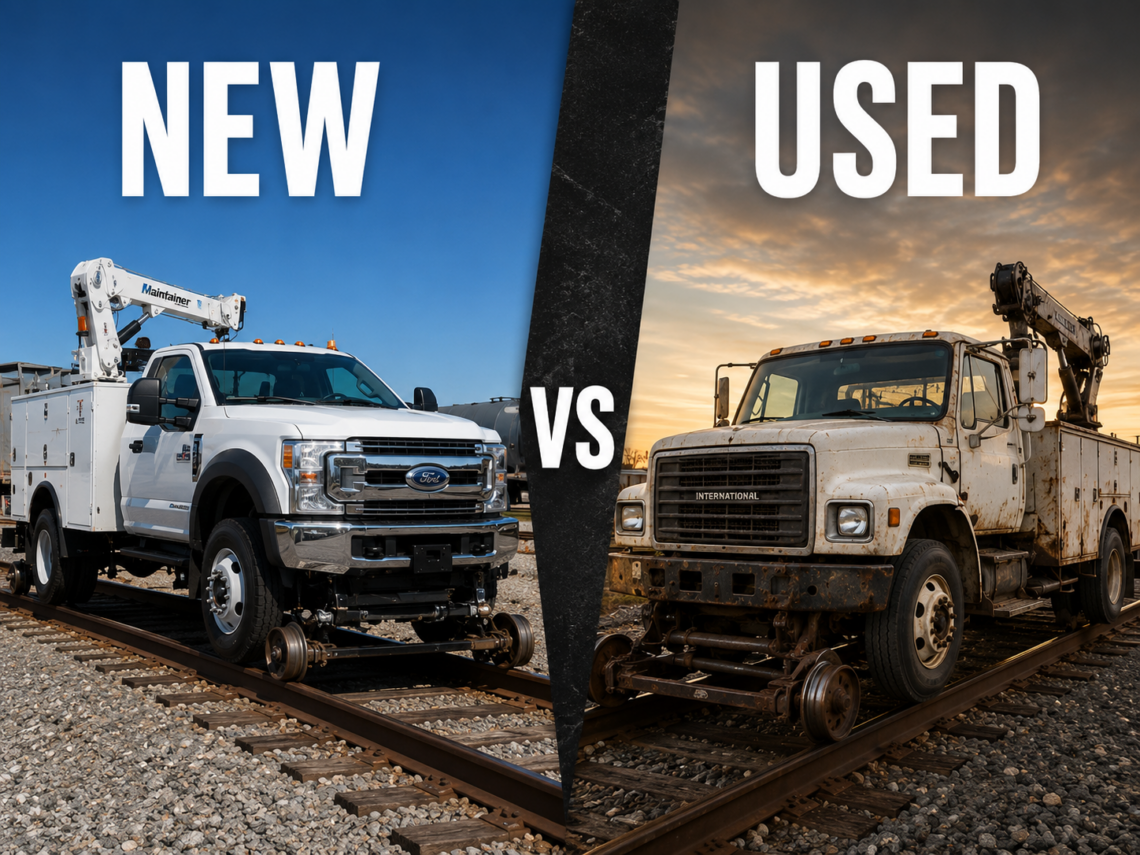
Ownership and rental solve different problems. The real comparison is cost per productive shift after mobilization, availability, utilization, support and project risk.
TL;DR
The practical takeaway
- Rent when schedule uncertainty and low utilization outweigh control.
- Buy when the machine is repeatedly needed, specialized to the work and supported internally.
- Include mobilization, attachments, downtime and residual value—not just monthly payment or rental rate.
When rental is usually stronger
- A short, defined project with uncertain follow-on work.
- A specialty machine needed only a few times a year.
- The contractor lacks technicians, storage or inspection capability.
- The rental source guarantees a suitable configuration and timely replacement support.
When ownership is usually stronger
- The machine supports recurring work windows or emergency response.
- Configuration and attachments are difficult to source locally.
- Mobilization delays would threaten track time.
- The organization can maintain, inspect, store and schedule it effectively.
Compare cost per productive shift
| Ownership costs | Rental costs |
|---|---|
| Purchase price and financing | Base rental rate |
| Depreciation and resale risk | Delivery, pickup and minimum term |
| Maintenance, inspections and repairs | Damage waiver and consumables |
| Storage, insurance and taxes | Standby days and extensions |
| Mobilization and permits | Attachment and setup charges |
| Downtime and spare coverage | Availability and replacement response |
A simple decision test
- Estimate realistic annual productive days.
- Price the exact configuration—not a generic base machine.
- Add mobilization and standby.
- Assign a cost to unavailable or lost track time.
- Estimate ownership support and residual value conservatively.
- Stress-test the result at lower utilization and one major repair.
Technical sources and further reading
This article is general purchasing and maintenance information. Follow the railroad’s operating rules, the equipment manufacturer’s instructions and applicable federal, state and local requirements.