

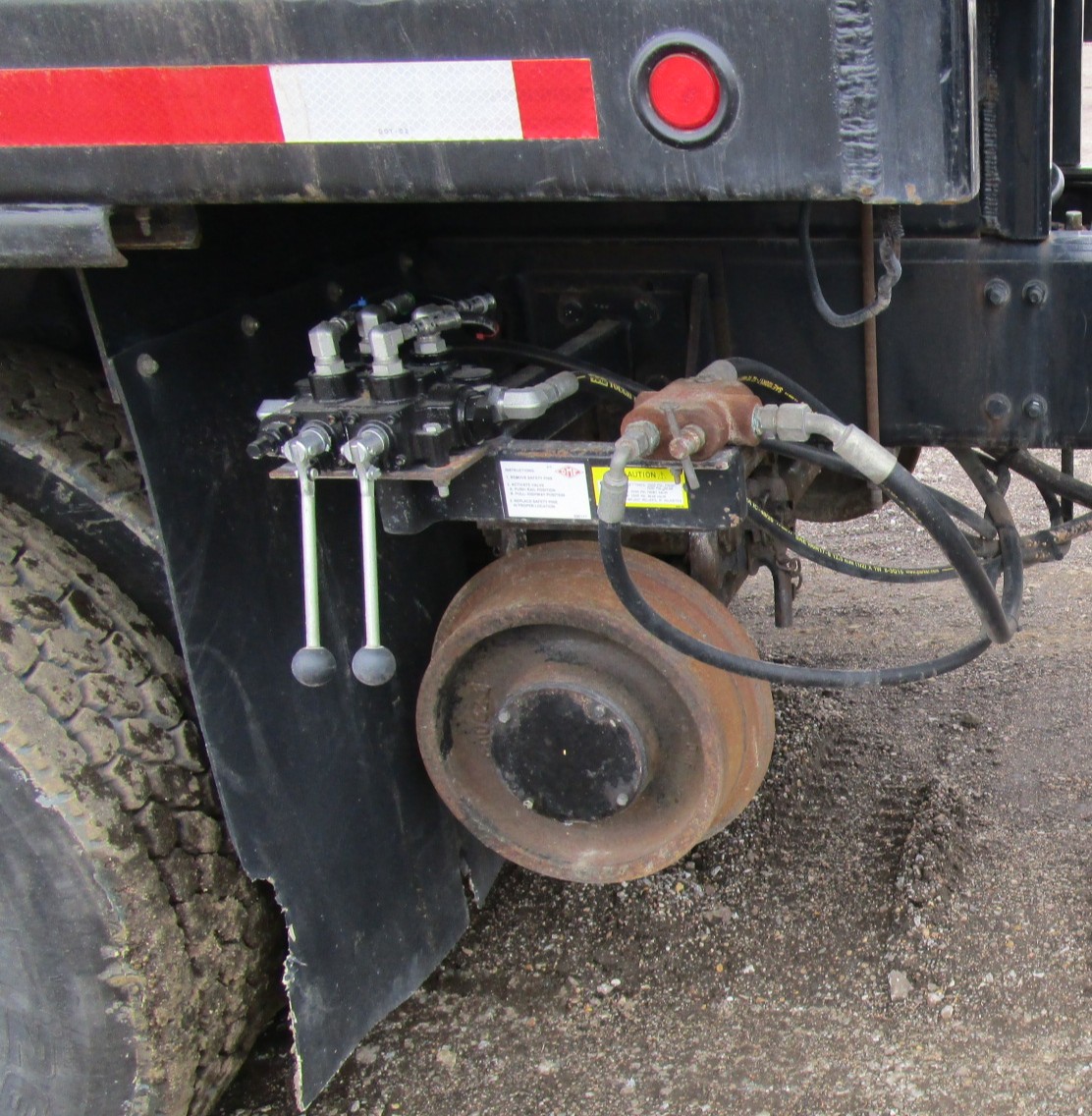
Rail gear is a measurement-sensitive system. Wear patterns, tire condition and mount movement often tell a story before a component fails.
TL;DR
The practical takeaway
- Use the manufacturer’s inspection and alignment procedure.
- Uneven flange wear is a symptom to investigate, not merely a wheel-replacement item.
- Inspect locks, pins, bearings, hoses, mounts and tires as one operating system.
Daily visual and functional points
- Rail wheels, flanges and tread condition.
- Pins, retainers, locks and stops fully present.
- Hydraulic hoses, fittings, cylinders and leaks.
- Mounting brackets, fasteners, welds and frame contact.
- Rail sweeps, warning devices and cameras.
- Tires at specified size and pressure with no abnormal wear.
Wear patterns that deserve investigation
| Finding | Possible contributors |
|---|---|
| One-sided flange wear | Toe, lateral alignment, axle squareness or repeated territory conditions |
| Both flanges heavily worn | Gauge or tracking problem, high mileage or poor wheel load |
| Flat spot or impact mark | Skidding, locked wheel, crossing impact or handling damage |
| Loose pivot or elongated hole | Inadequate lubrication, wear or repeated shock loading |
| Cylinder rod damage | Contamination, side load or inadequate protection |
| Tire sidewall rub/contact | Incorrect clearance, tire size or rail-gear position |
Alignment and wheel load
The vehicle should be on a suitable level surface and prepared exactly as the manufacturer specifies. Tire pressure, suspension condition and vehicle loading affect measurements. Do not copy dimensions from another model or rely on a tape measure across convenient points.
Buyer questions
- Who last aligned the gear and what procedure was used?
- Are before-and-after measurements available?
- Were rail wheels replaced as a pair or individually, and why?
- Which tire specification is required?
- Are any locks, stops or pins non-original?
- Has the mounting structure been repaired or moved?
Technical sources and further reading
- 49 CFR Part 214 — Railroad Workplace Safety
- DMF RW-1016 Parts & Service Manual
- DMF RW-1630/RW-1630-50 Manual
- Continental Railworks 20 Series Manual
- Rafna R-1130 Installation, Maintenance and Operating Manual
This article is general purchasing and maintenance information. Follow the railroad’s operating rules, the equipment manufacturer’s instructions and applicable federal, state and local requirements.