

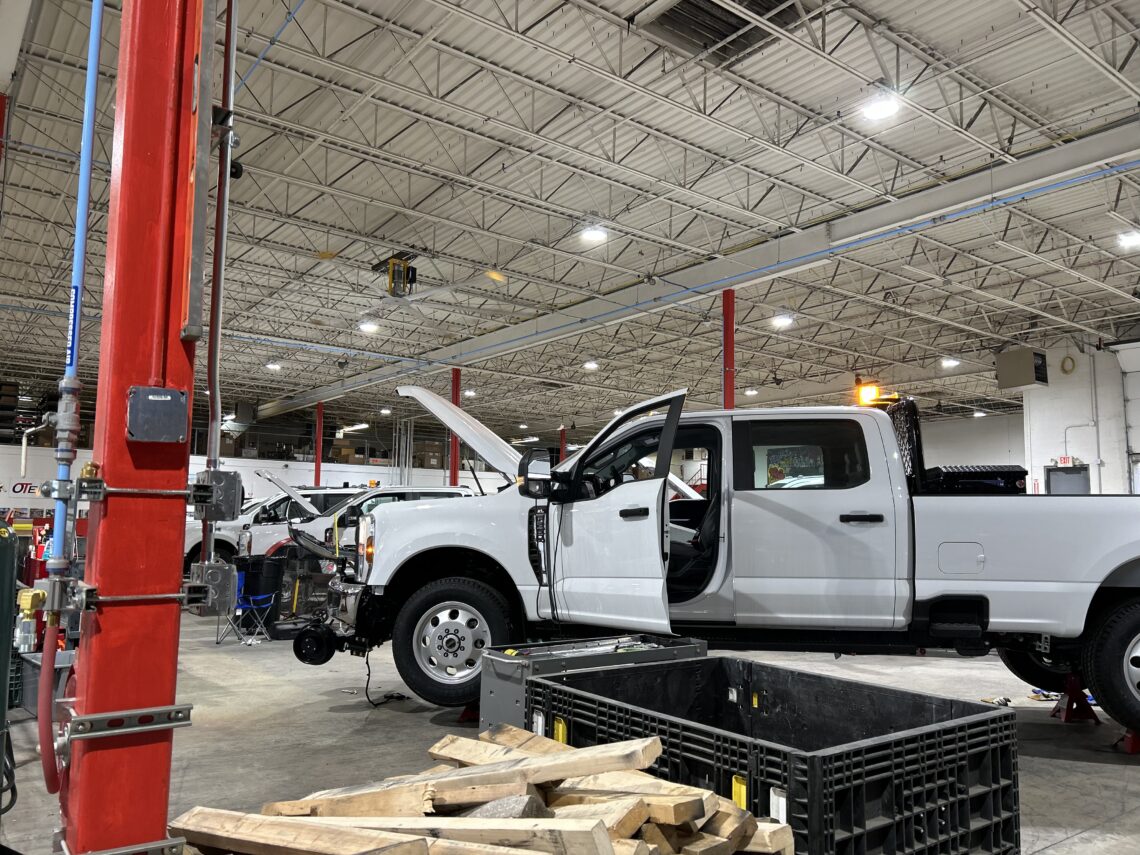
Buying one hi-rail truck and replacing part of a railroad fleet are two very different purchases.
Why This Matters
For OTE’s audience, this is not only a truck-shopping question. A single replacement unit may be judged on availability and fit, while a multi-unit railroad purchase also affects parts commonality, training, maintenance routines, rollout timing, and future replacement decisions.
For a smaller contractor, the decision may come down to finding the right truck, making sure it fits the work, and getting it into service without overspending. For a railroad buying multiple units, the decision gets bigger quickly.
- Can the trucks be built to a common specification?
- Will operators be able to move between units easily?
- Can maintenance teams stock common parts?
- Are the rail gear, hydraulics, bodies, and controls consistent?
- How will the trucks fit into the existing fleet?
- What is the expected service life?
- How quickly can the units be delivered and put into service?
That is why choosing between a new and used hi-rail truck should not start with “Which truck is cheaper?”
A better question is: Which option fits the way your railroad or contracting operation actually works?
The short answer
- New hi-rail trucks give buyers the most control over configuration and fleet consistency.
- Used hi-rail trucks can be the faster, lower-entry-cost choice when the existing configuration already fits the work.
- Fleet buyers should compare lifecycle cost, downtime exposure, parts support, operator familiarity, and standardization—not just purchase price.
When a New Hi-Rail Truck Makes Sense
The biggest advantage of a new build is control. The truck can be configured around the work instead of forcing the work to fit whatever is available.
That can include chassis, axle ratings, rail gear, body layout, crane or grapple, hydraulic systems, tool storage, lighting, towing requirements, payload, safety equipment, and other railroad-specific needs.
For a fleet purchase, this becomes even more important. If several trucks will perform similar work, there is real value in keeping them as consistent as practical. Maintenance knows what parts to stock. Operators know the layout. Technicians become familiar with common systems. Future replacements can follow an established specification.
“When a customer is buying a fleet, consistency becomes a much bigger part of the conversation. It is not just about building several trucks. It is about making sure the equipment works the same way for the crews and the people who have to maintain it.”
— Aaron S.
When Used Hi-Rail Equipment Makes Sense
Used equipment has a different advantage: the truck may already exist and already be close to the configuration you need.
- A truck needs to be replaced quickly.
- Additional capacity is needed for a project or territory.
- The equipment will see lower utilization.
- The acquisition budget matters more than having a completely standardized build.
- The available truck already matches the application closely.
A good used truck can be a very practical purchase. The problem comes when buyers focus on the sale price before determining whether the truck actually fits the job.
“A used truck can be a great fit when it already does what the customer needs. Where the value starts disappearing is when you buy the truck first and then realize you have to change half of it to make it work.”
— Aaron S.
Fleet Buyers Have More to Consider
For a railroad buying several trucks, the purchase affects more than the people driving them. It affects maintenance, parts inventory, training, documentation, preventive maintenance schedules, replacement planning, operator familiarity, downtime, and future purchases.
Several individually good trucks can still create a difficult fleet if every unit uses different rail gear, controls, hydraulic components, and body layouts.
Standardize What Makes Sense
Fleet standardization does not mean every truck needs to be identical. A grapple truck and a signal truck do different jobs. The goal is to keep common components common wherever practical while changing the equipment that truly needs to change for the application.
- Chassis families
- Rail gear
- Hydraulic components
- Controls
- Lighting and cameras
- Safety equipment
- Storage standards
- Service parts
“Standardization does not mean every truck has to be the same. It means keeping the things that can be common, common, and changing the equipment that actually needs to change for the job.”
— Aaron S.
Do Not Compare Purchase Price Alone
The least expensive truck to purchase is not always the least expensive truck to own. A better comparison is purchase price plus maintenance, repairs, parts, downtime, training, and expected service life.
A lower-priced unit becomes less attractive if parts are difficult to source, the rail gear is unfamiliar to the maintenance team, the body does not fit the work, or the unit regularly sits out of service.
Look at the Entire Hi-Rail Truck
A hi-rail truck is several systems working together. Evaluate the chassis, rail gear, and work equipment separately, then evaluate how they function as one complete vehicle.
The chassis
Review engine, transmission, suspension, brakes, frame, tires, electrical system, mileage, hours, and general condition.
The rail gear
Review rail wheels, mounting structure, hydraulics, pins, bushings, locks, controls, alignment, and available inspection records.
The work equipment
Depending on the truck, this may include a grapple, crane, service body, hydraulic power, generator, welder, material storage, and specialty tooling.
New Builds Give Fleet Buyers More Control
For a multi-unit order, a new build lets the buyer establish the specification before production begins. Operations, maintenance, safety, procurement, and the crews can all contribute before a design decision is repeated across several units.
Used Equipment Can Still Play a Role in a Larger Fleet
The answer does not have to be all new or all used. Used equipment can fill backup, short-term, lower-utilization, specialized, or faster replacement needs while the primary fleet follows a longer-term standardization plan.
Questions to Answer Before Requesting a Quote
- What will the truck actually do?
- How many units are needed now, and are more likely later?
- What should remain common with the existing fleet?
- How quickly is the equipment needed?
- Who will maintain it?
- What does downtime cost the operation?
So, Should You Buy New or Used?
There is no universal answer. New builds are often the better fit when configuration control and fleet consistency matter most. Used equipment can be the better fit when availability, budget, or a specific near-term need matters more. Some fleets benefit from both.
What This Means for Fleet Buyers
For a railroad fleet, write down the components that should stay common before requesting quotes: chassis family, rail gear, controls, lighting, cameras, body conventions, service parts, and safety equipment. Specialized work equipment can then vary by assignment without turning every truck into a completely different maintenance problem.
Frequently Asked Questions
Is a new hi-rail truck always better than used?
No. New equipment usually offers more configuration control, while used equipment can provide faster availability and strong value when it already matches the application.
What matters most when buying several hi-rail trucks?
Consistency. Common components, controls, service procedures, and parts can reduce complexity across the fleet.
Should purchase price be the main comparison?
No. Include expected repairs, maintenance, downtime, training, parts availability, and useful service life.
Talk With Omaha Track Equipment
Omaha Track Equipment works with railroads and rail contractors across the United States and Canada on individual equipment purchases, used equipment, and custom multi-unit hi-rail fleet builds.
View Hi-Rail Trucks for Sale | View Used Heavy Equipment | Contact Omaha Track Equipment
Related Resources
This article provides general equipment-purchasing information. Railroad requirements, inspections, specifications, and acceptance procedures vary by application and railroad.